Travel to the Balkans before it's too late: Part 2
Albania, Macedonia, Kosovo, Montenegro and Bosnia
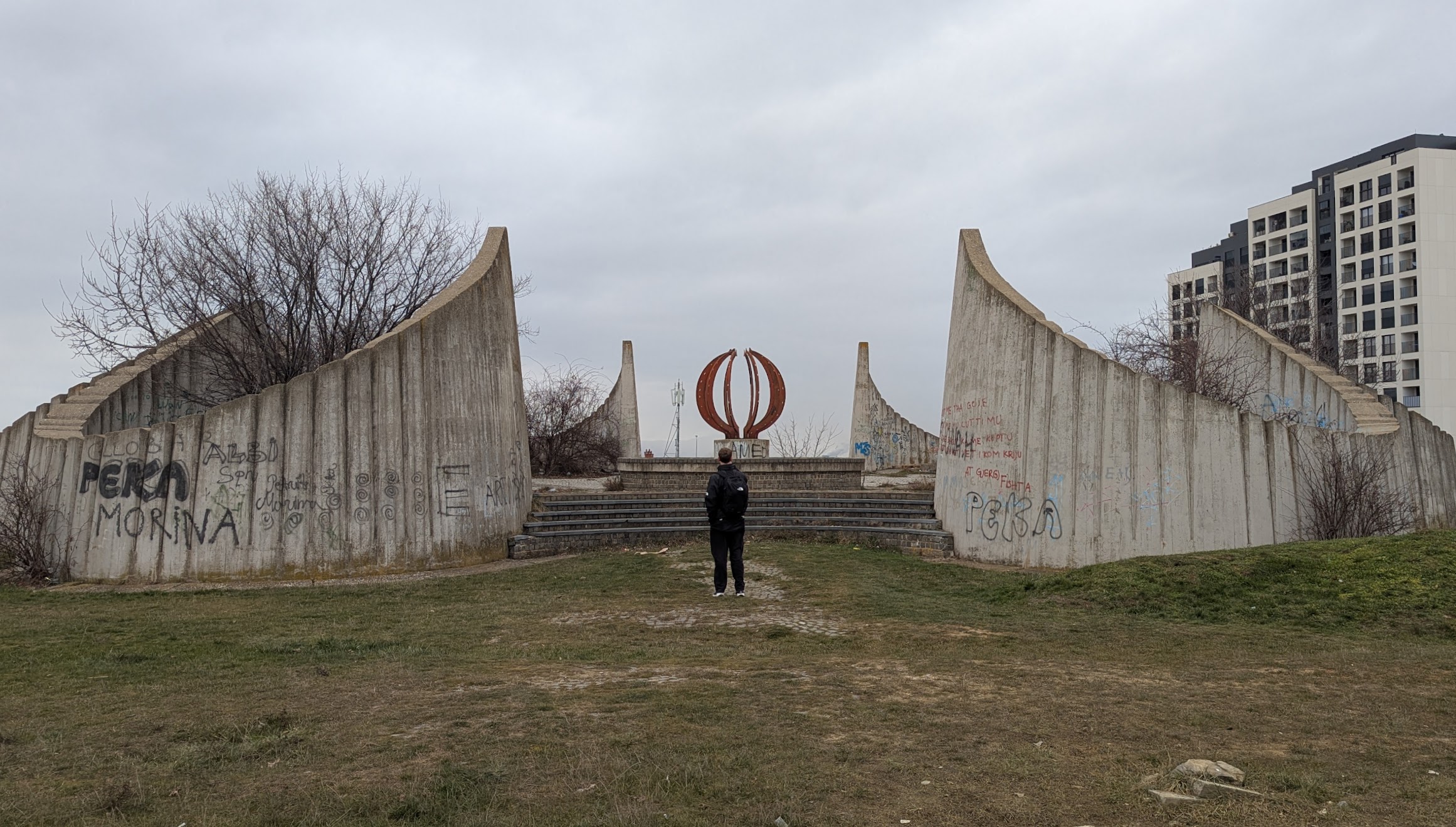
After an epic and memorable trip to the Balkans last year, me and Tom decided to return and see the countries we missed out on the last route. This was to include Albania, North Macedonia, Kosovo, Montenegro and Bosnia. We’ve already visited Slovenia multiple times (highly recommend) so these countries would all be new to us and would check off all the Balkans off our list.
One might also count Greece as part of these groups of countries but I knew I’d be doing there for a full trip soon anyway so decided to leave it out for now.
The Route
We decided to save some money and avoid potential border crossing difficulties by opting to not rent a car and use public transport for all our travel. That being said renting a car would definitely have been a fun way to do things as public transport connections aren’t the best in this part of the world and we would have been able to see more things on the way but we opted for the safer option.
Other than one of the initial bookings being cancelled and us having to rebook transport for a different time we did not have any issues with public transport. We took buses (coaches & minibuses) to get between all the different locations and while some of them were crammed they were extremely cheap and it gave us an authentic local experience.
We decided to start in Tirana (Albania) simply because I could find cheaper flights to there from the UK and then follow the shortest route up through the countries towards Bosnia. Starting in Bosnia and working your way down is probably an equally viable option if it’s easier to get to Bosnia first as both places have decently frequent flight service.
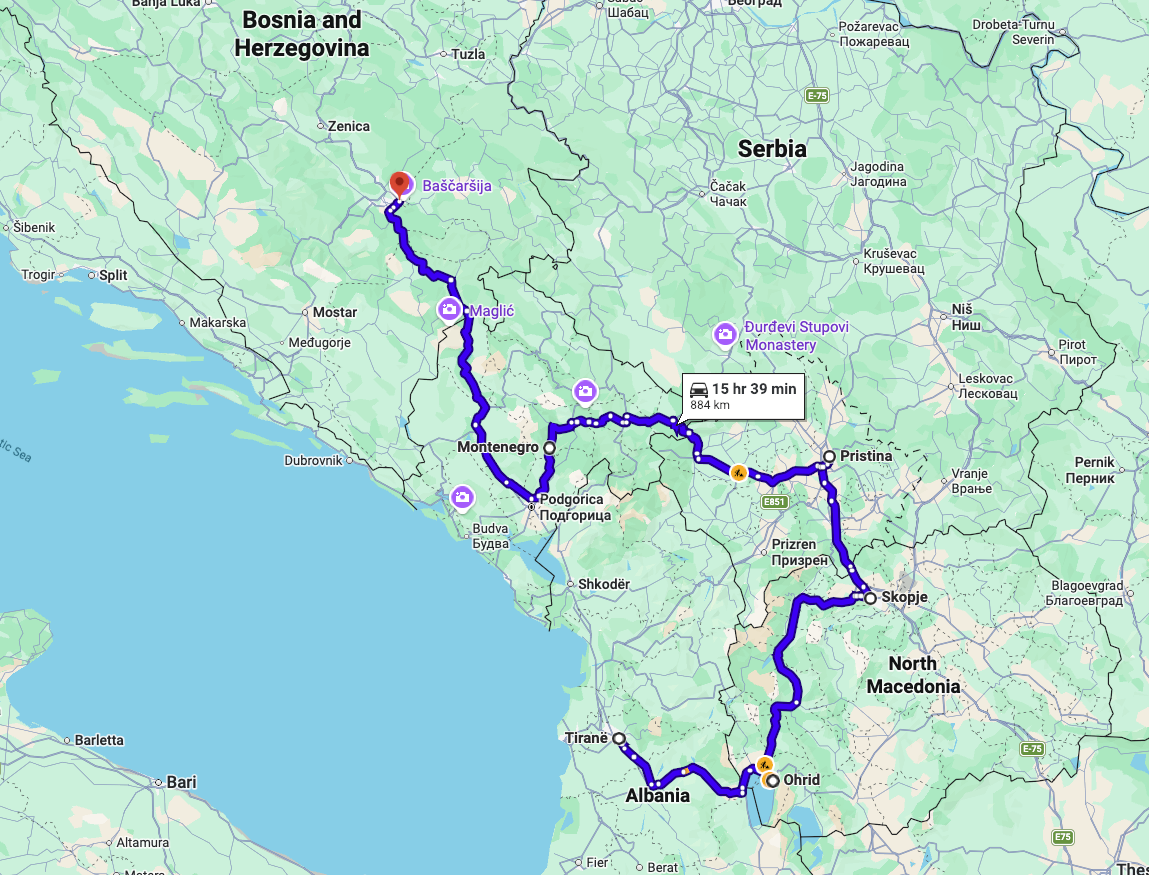 Route
Route
Albania
Getting there
Tirana airport has decent international flight service which makes it a good starting point. The airport is around 30mins from the city center. You could get a taxi from the rank right next to the airport or if you don’t want the potential stress of haggling with the driver, we used booking.com to book a taxi for around €20. There are plenty of very cheap hotel options right in the city center (“no one come here” - hotel manager) so it’s a no brainer to start the trip there.
Tirana
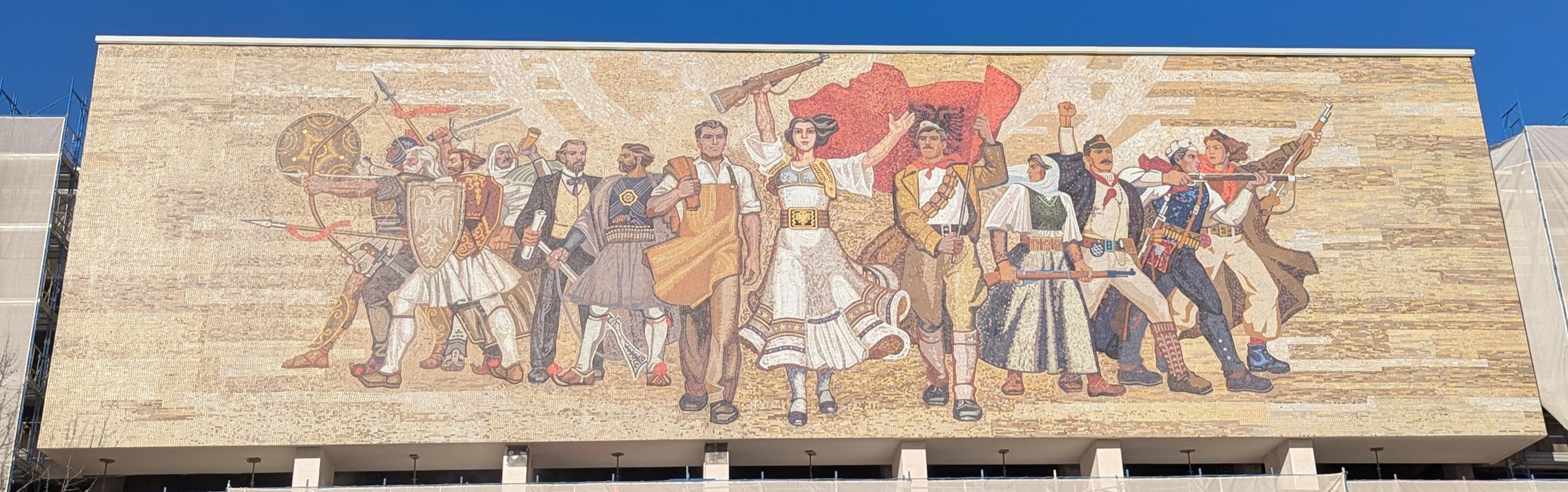 Skanderbeg Square Mural
We had 14 days to see 5 countries so we had to ration time in each country and allow for long transport days. I decided to only spend a day in Albania as the other countries looked like they had more interesting day trips and figured it would be nicer to have more rest time in each country as the journey went on. I discovered from last trip that after about 7-8 days on the road it’s very useful to have a day in bed to recover before being able to process much else which has been confirmed by this trip. The start of the trip also always feels longer as there is so much fresh information to take in.
Rambling aside, I would say 1 day is a good duration to be able to get a feel for and see most of Tirana. The only thing on my list that we did not get to do is go up the cable car, but if you get up earlier than us you would have time for that too.
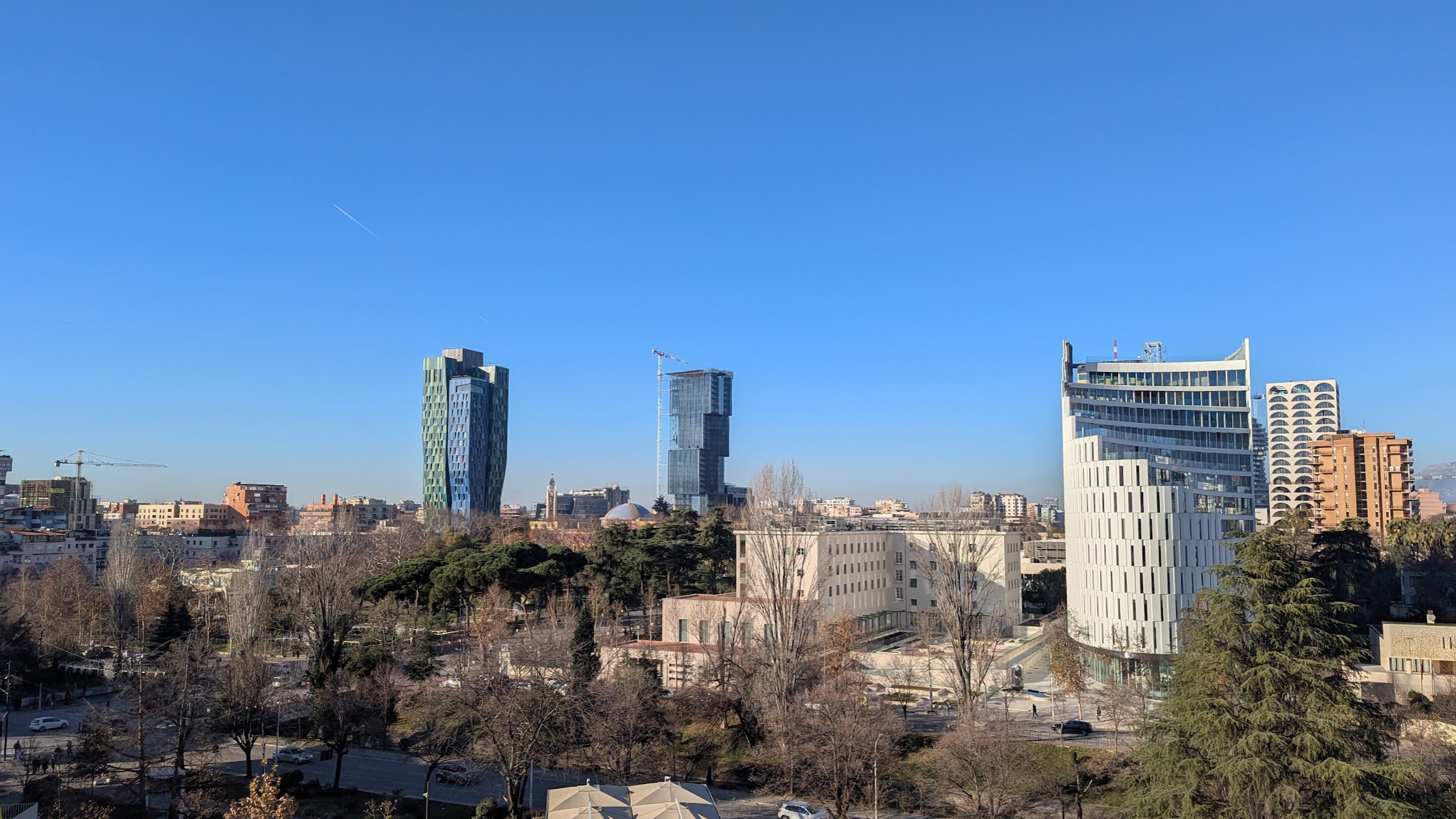 View from Pyramid of Tirana
Tirana is a great walking city and we were able to see everything by walking less than 10-15 mins from the main square. The cable car is on the edge of a city which would require a taxi but other than that it’s a great place for short strolls, especially if the weather is good. Start at Skanderbeg Square and if you want a good top view over the city climb up the Pyramid of Tirana (there’s also a contemporary gallery inside). The castle just west of the Pyramid is definitely worth a wander around, being filled out with nice looking tourist shops and cafes. Et’hem Mosque is also an important relic of religion surviving through the Communist regime and is worth a look inside. Conversely highlighting the diversity of religion and old and new the Orthodox Cathedral built in 2012 offers a diff
The history side of Albania is something I knew basically nothing about prior to this trip. I would highly suggest reading up on some of it before going as it’s very interesting and gives some context as to the things you’ll be seeing. Tirana is a relatively new city, built up mostly from the 1930’s onwards which explains a lot of the modern and futuristic architecture. It’s also had a pretty troubled past going between an extremely isolated and paranoid communist regime to a broken capitalist system. Despite possibly being one of the least visited countries out of the ones on this trip it does seem to be building itself back up and felt a lot more positive than some of the other countries.
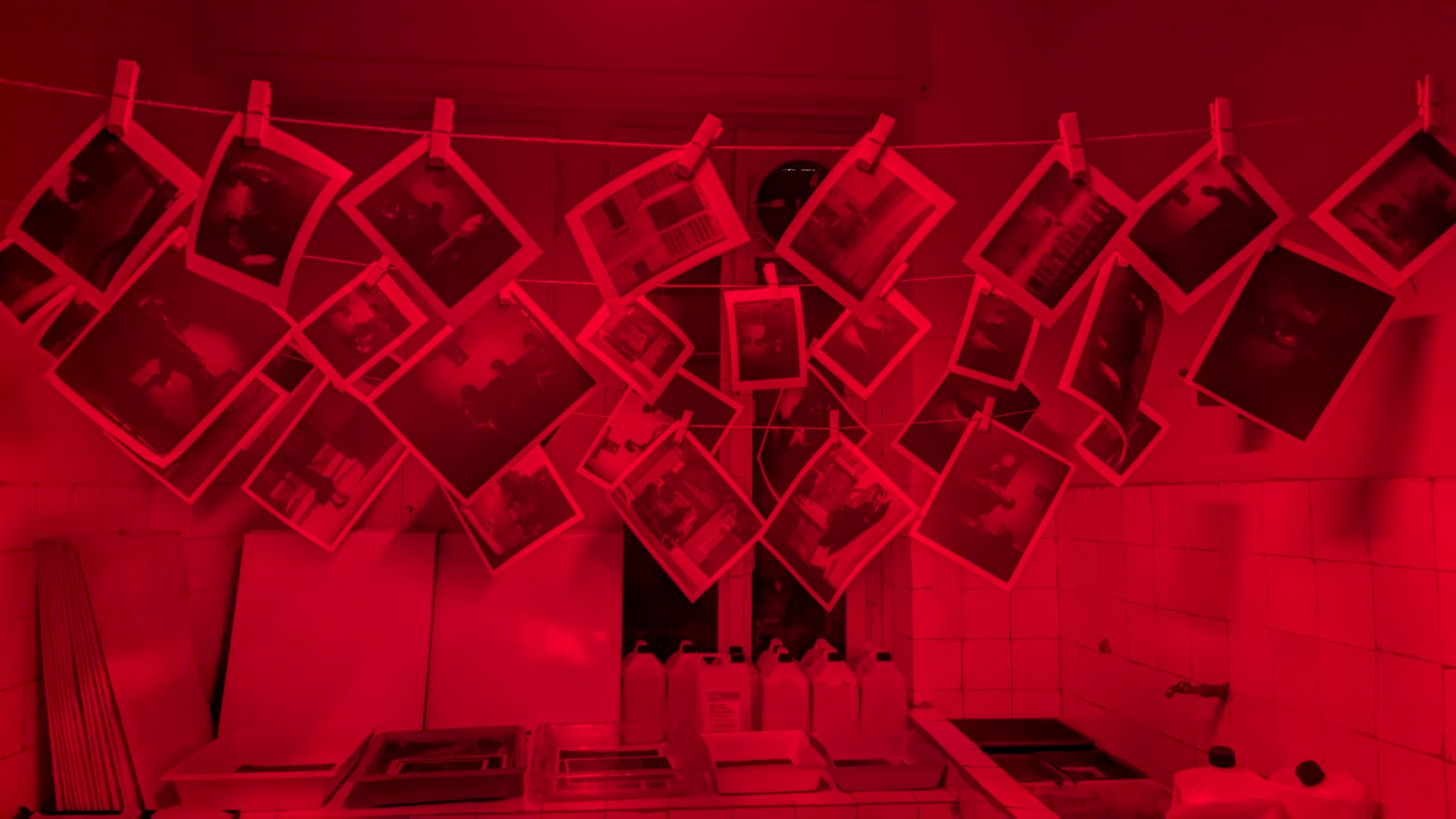 House of Leaves
Towards the evening there was a concert in the central square which felt very nice as it was mostly put on for the local population so I did not feel like a tourist being presented with a front. We decided to look for some bars in the evening (when in the Balkans..). Blloku area was recommended in the guides that I have seen as a hip youth area but it felt mostly disappointing, being quite empty and mostly hosting “Instagram” type cafes and bars. We wanted a more authentic experience and were able to find some more rustic bars just south of the main square (you know it’s authentic when there is a tree trunk growing through it!).
To hammer home how much spare time we had we decided to spend the rest of the evening in a board game bar as it’s something we’ve came across on our previous Balkan trip and made me very much yearn for it in the UK. We did notice some poverty walking around in the evening but generally people seemed decently looked after and happy. Not quite the Albania I was expecting.
Highlights
- Skanderbeg Square
- Pyramid of Tirana
- House of Leaves
- BunkArt 2
North Macedonia
We had a bus the next morning from Tirana Bus Station (~20 min drive South of the city center so we booked a taxi to get there) to Skopje. This was booked through flixbus but ended up being a small and warm minibus that we probably could have paid 5 euros for at the bustop. Tourist tax. There was one or two tourists on the bus (including a lovely lady that moved to let me and Tom sit together) but this mode of transport seems to mostly be braved by the locals looking to save some cash.
When originally planning the trip I booked buses between the capitals and then later looked at daytrips from the capitals. As we were approaching the Albania/Macedonia border I noticed that we were going to pass Ohrid 3 hours before our intended arrival in Skopje. Not wanting to suffer an extra 3 hours of driving and another 3 hours tomorrow when we planned to go back to Ohrid we made a spontaneous decision to hop off the bus as close to Ohrid as the road would take us (Struga) and make our way to Ohrid that day to save some time. Looking at the map before planning the trip would have been useful! The taxi from Struga to Ohrid only cost around 10 euros but there are bus connections directly between Tirana and Ohrid which would probably have been the smart thing to do.
Ohrid
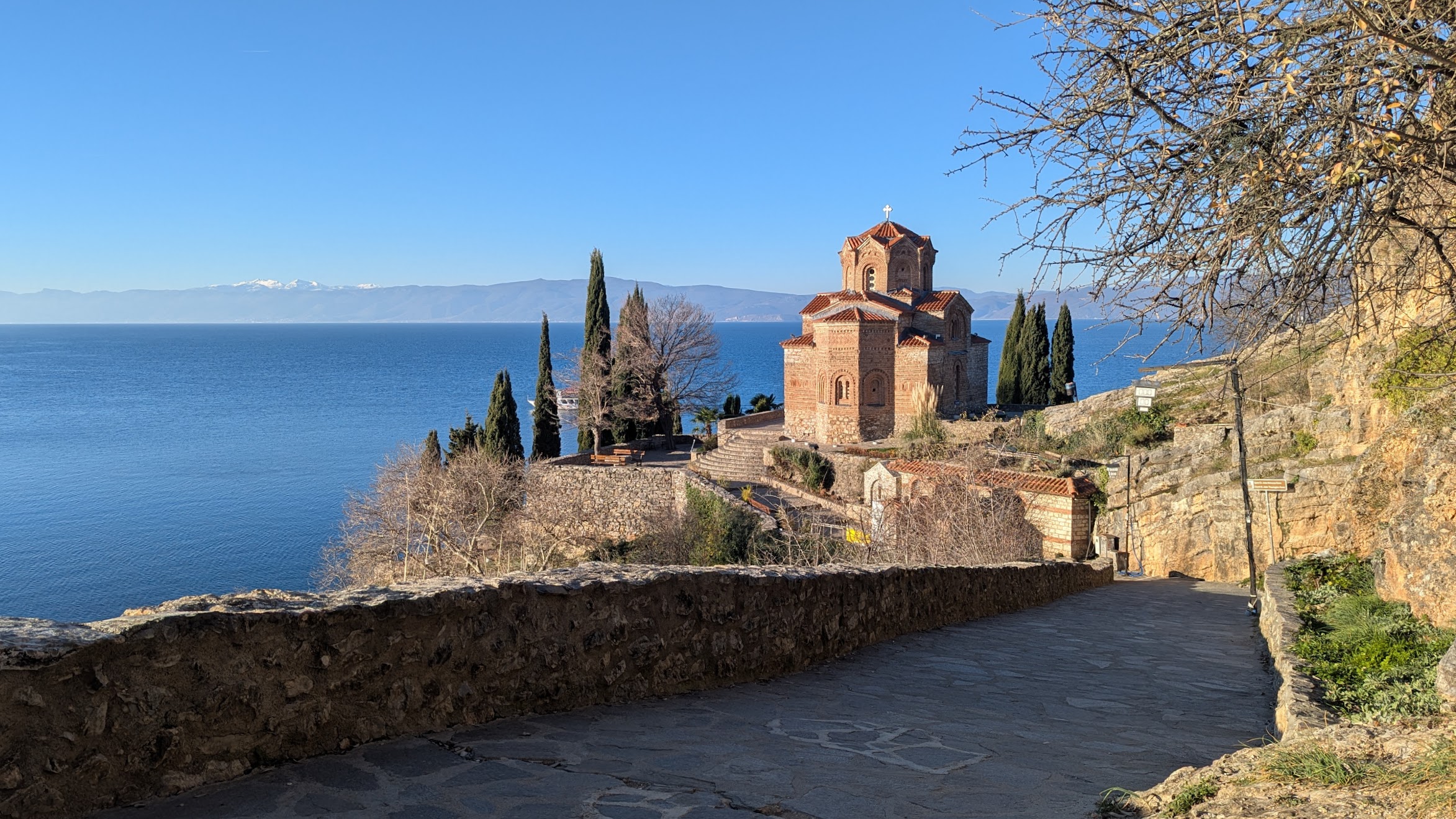 Church of Saint Jovan the Theologian
Perhaps this was coloured by our serendipitous exit from the bus to see Ohrid a day early but this was my favourite part of the trip. Ohrid is an ancient village (originally called Lychnidos - City of Light) which stands beside a ~2 million year old lake which is both a UNESCO Biosphere Reserve for it’s rare waterlife and Heritage Site for it’s history. I could go on about different bits of history or what makes this place special but for me being there simply just felt magical in an almost ancient sense. Perhaps it’s the Eastern Orthodox roots coming out but this place felt incredibly peaceful and beautiful and this was before even finding out about a lot of it’s history. I would very highly recommend this stop if going between Tirana and Skopje (also saves having to sit 6 hours in a bus/car) and spending a day here.
We only got to the town center around 3pm so didn’t have a great amount of time to explore but decided to make the hill climb up to the fortress to catch the sunset and were taking on
an ad-hoc tour by a security guard sensing an opportunity before closing time. It was a lovely experience including access to a bunch of sites that aren’t usually accessible to tourists,
professional level photography and a cigarette a piece afterwards. I urge anyone travelling these parts to not be afraid to talk to people as everyone we meet was extremely friendly and willing to chat or help
even despite not always having great English. The people make these places special as much as the history and it doesn’t feel like it’s overly touristy at the moment meaning there is genuine excitement upon seeing
an arrival to their home country from somewhere abroad.
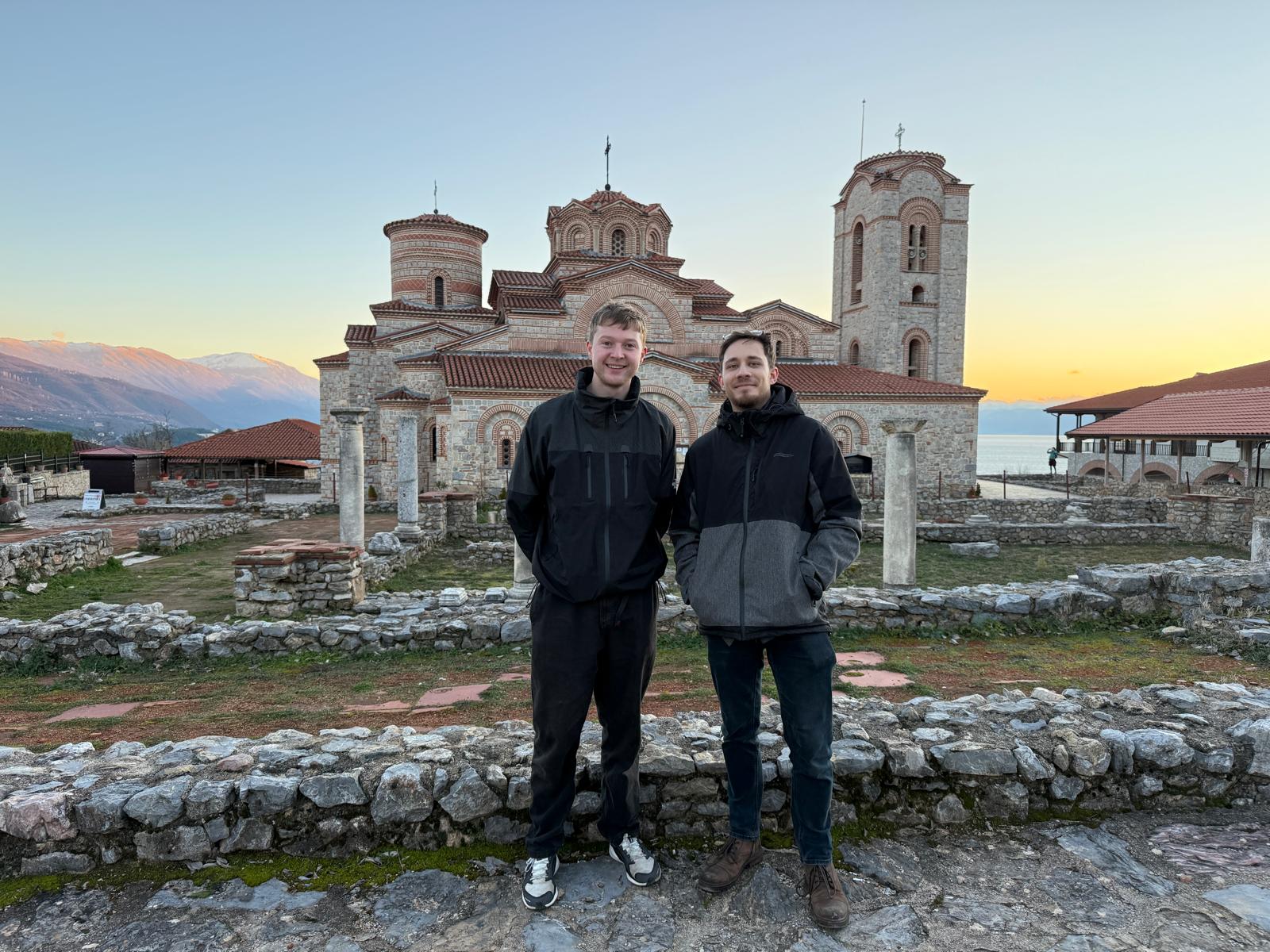 Spontaneous Tour
I went on a walk in the old town again in the morning and would highly recommend this as an extremely tranquil experience. Ohrid is colloquially referred to as the Mecca of Europe and being religious or not it’s hard not to feel some kind of spiritual connection in this place.
Highlights
- Church of Saint Jovan the Theologian
- Plaoshnik Park
- Theatre of Ohrid
- Morning/Sunset Walks
Skopje
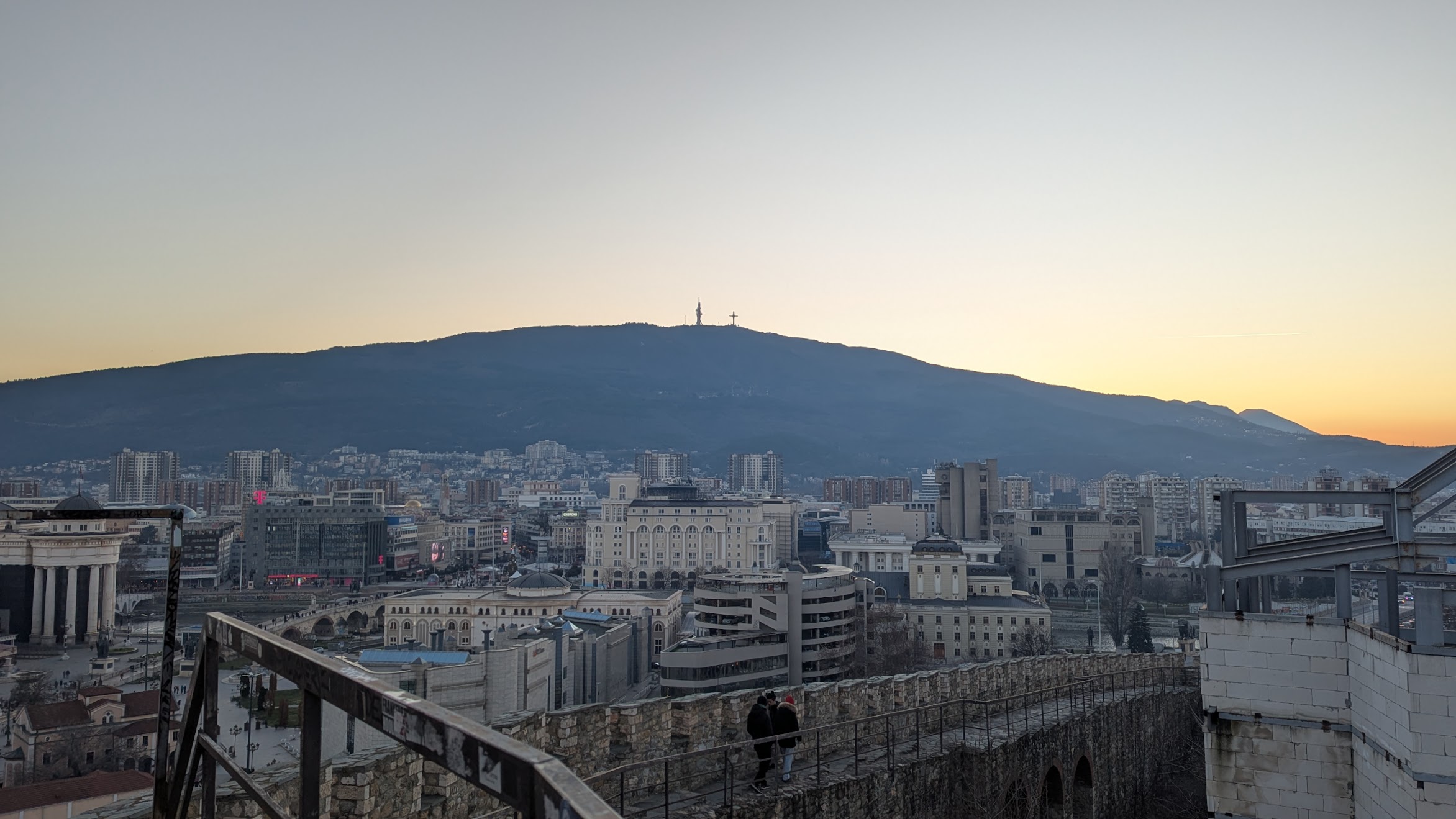 View from Skopje Fortress
After a mental health day in Ohrid, we were back on track in Skopje, capital of North Macedonia. There is plenty of political shade being thrown about Skopje and it’s various city projects so I was eager to see this for myself. Sadly it did not dissapoint as it turned out to be the poorest feeling and blatantly corrupt looking place we were going to visit.
The Skopje 2014 project has officially spent almost a billion dollars on reconstructing the city to a divisive effect. Despite it feeling like a massive amusement park or a semi-futuristic Call of Duty map, to me the city felt quite sad and souless, trying to forge an identity through facelifted government buildings and more statues than you could Ctrl-C Ctrl-V in Sims.
All that being said I couldn’t resist a snap with my boy Perseus spotted on one of the many statue bridges.
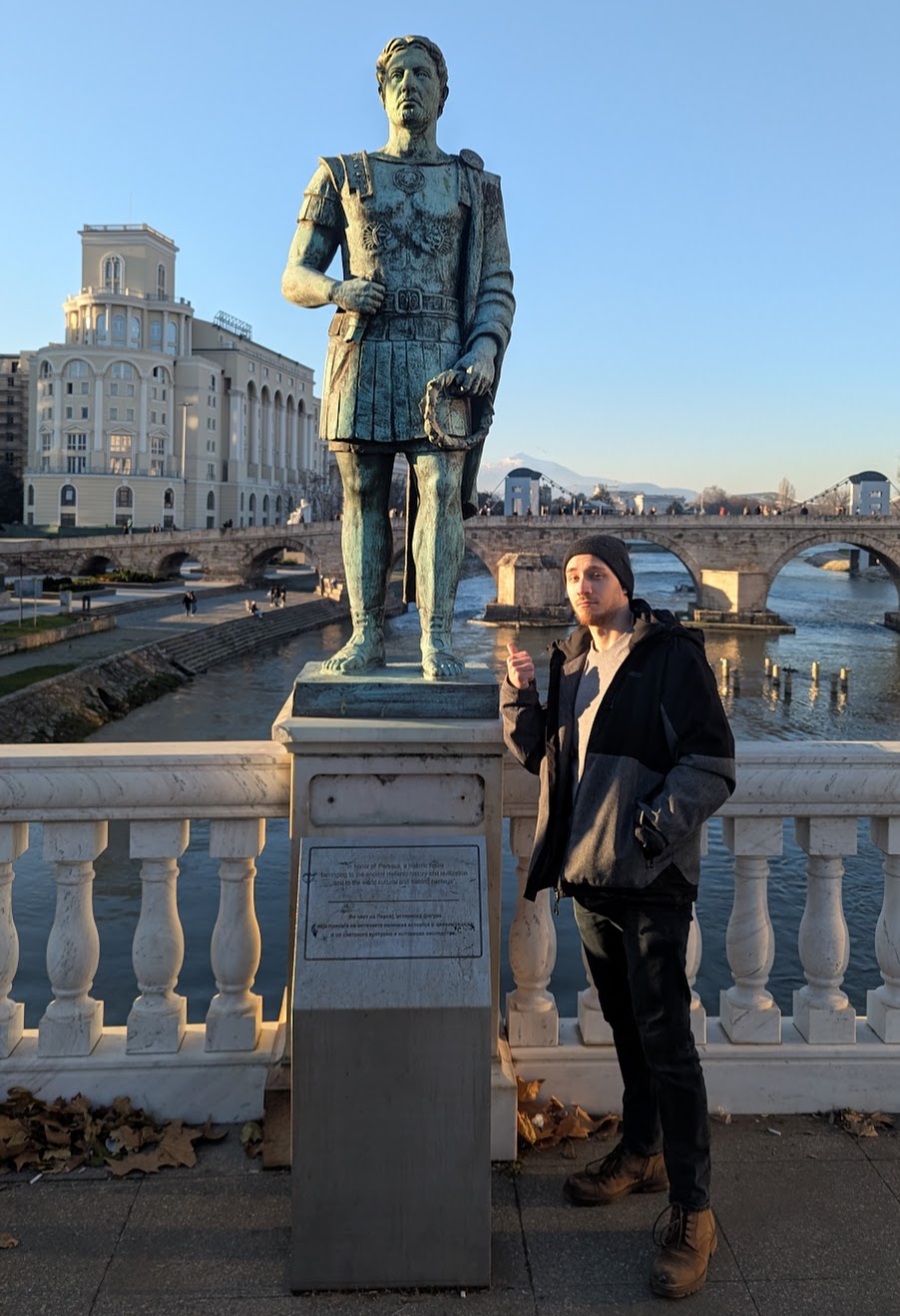 Statue of Perseus
Despite the recent attempt of reconstruction some brutalist architecture remains in the city.
Visit the post office or the University building across the river for some of the most unusual examples of buildings you’ll see even in this area of the world.
The park behind the shopping center (despite the Prometheus statue) also feels like a throwback to older soviet-era times, making me want to see more of that Skopje.
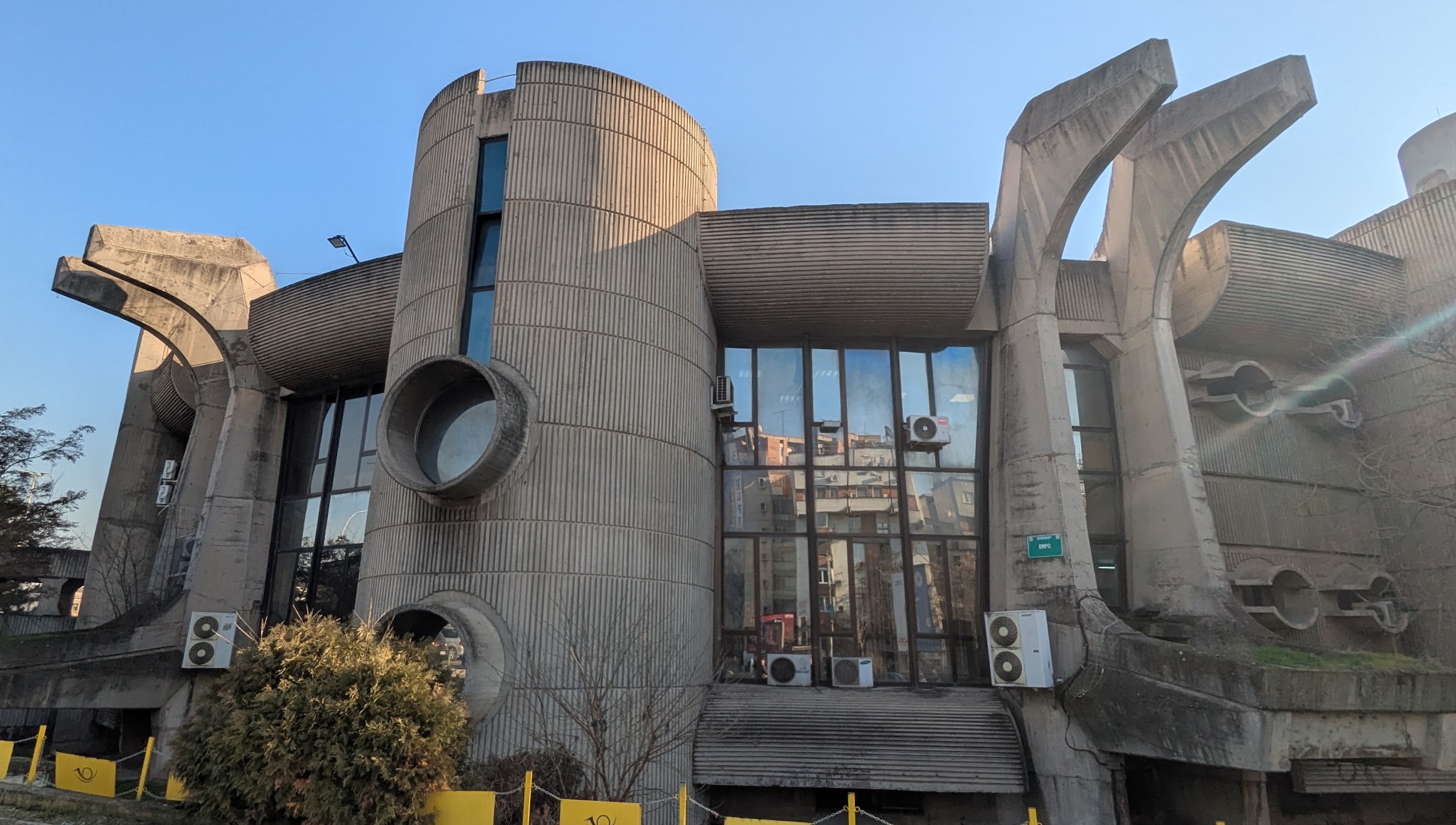 Skopje Post Office
There is also a cable car here which was sadly closed when we went to visit. For good views over the city, the Skopje Fortress offers nice 360 views from which Mosques, stadiums and most of the city center can be seen.
After tiring of walking around we decided to visit the Archeological Museum (massive building with pillars across the square) on the last day which was very good and had lots of interesting historical exhibits from the area. The Old Bazaar in the old town north of the river was also nice to stroll around and get a coffee in before heading up to the fortress. The Mother Theresa house is a quick visit on the way to the main square as well as the City Museum which are both free entry. There were plenty of bars around for nighttime, including an Old School Rock bar if looking for something with a bit more character. As smoking is allowed inside all of the countries on this trip, be prepared for the smell of tobacco to linger in your clothes for days if visiting any of these establishments. Skopje somehow felt the worst due to its busy bars, possibly because there was little better for the citizens to do in the city.
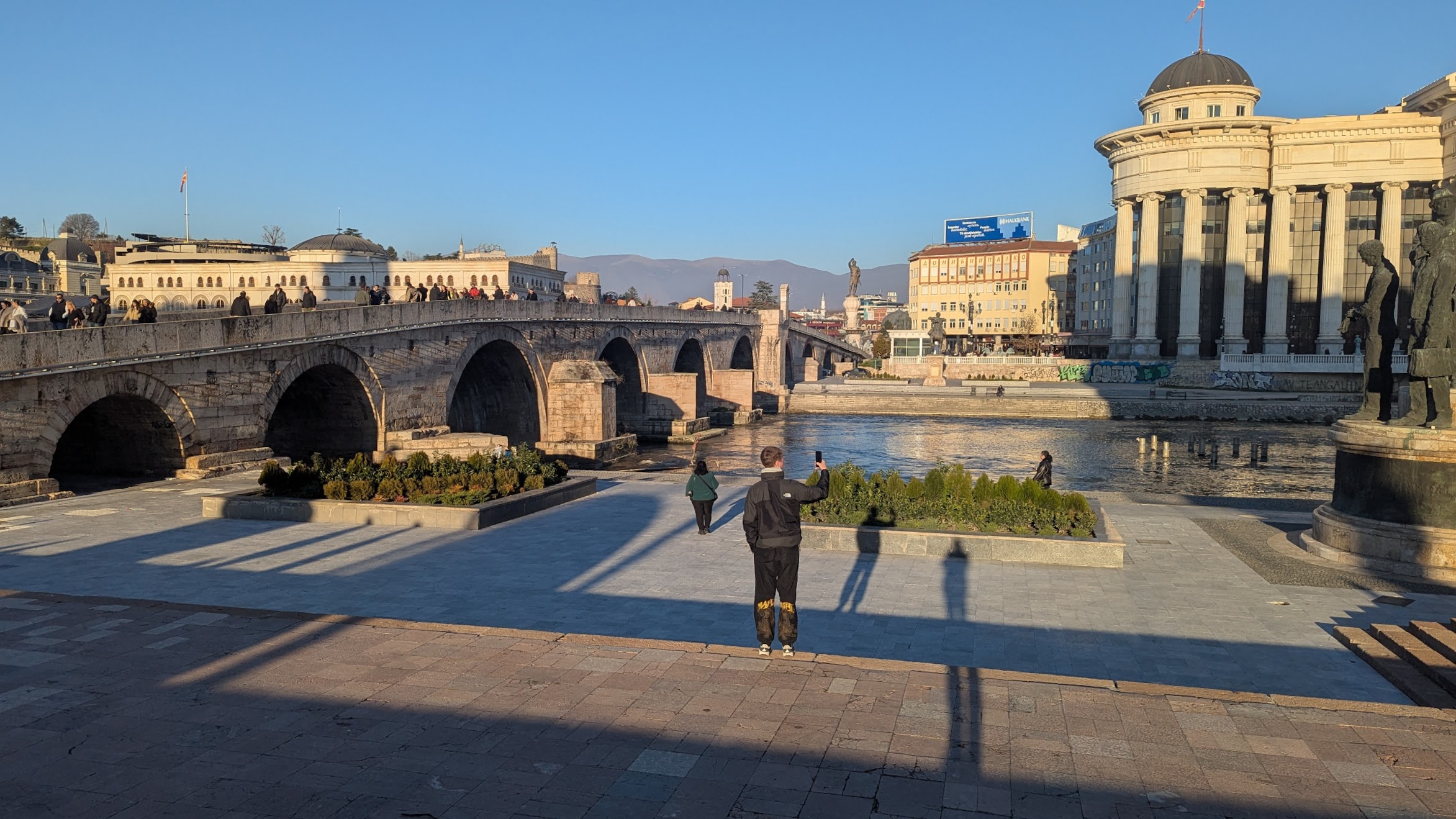 Main Square
All in all it was a mixed experience. There was definitely a variety of things to do and it was quite a unique place to see but the character of the city felt unsettled and the quality of life imbalance felt much more tangible.
Highlights
- Skopje Fortress
- Post Office
- Trying to see how many statues you could name
- The Money Notes
Kosovo
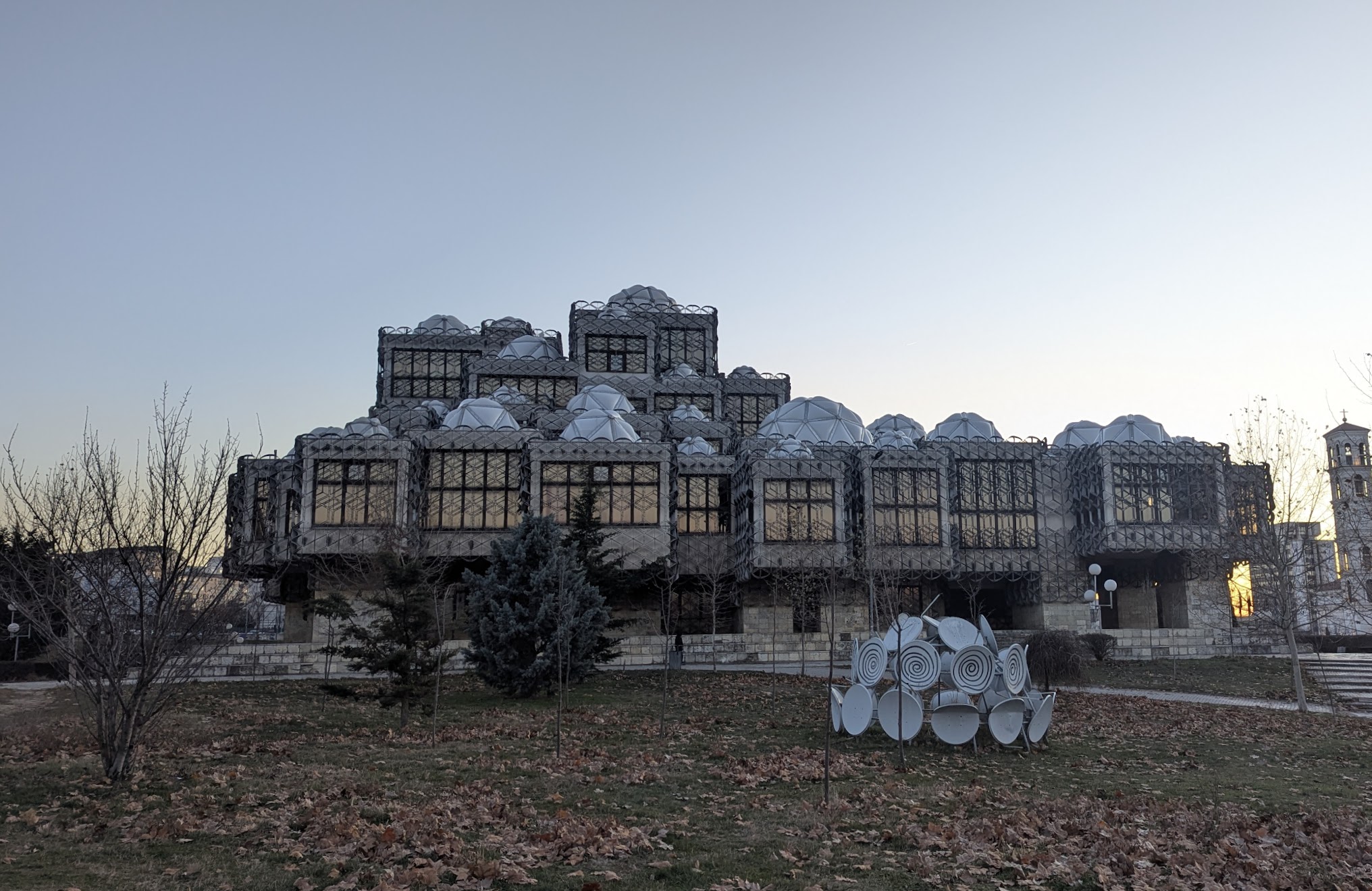 National Library
I’m sure Kosovo is on the list for some of the more dedicated scratch map tourists because of it’s unique and well-publicized dispute with it’s neighbour. It also marked a second year for me and Tom meeting a New Year is a disputably recognised country (suggestions for 2027 welcome in my inbox).
Despite a little bit of worry, crossing the border was trouble free as it was with the rest of the countries on this trip (the same might not be true if crossing from the north). Kosovo felt very homely and lived it (at least to me, growing up in a similar looking town with a similar political situation). It probably wasn’t completely safe by Western safety standards (it was the festive season and there were fireworks and even guns being shot all over the place) but it also felt like on the friendliest cities without us feeling any directed harm towards tourists, just a bit more lawless than perhaps we were used to.
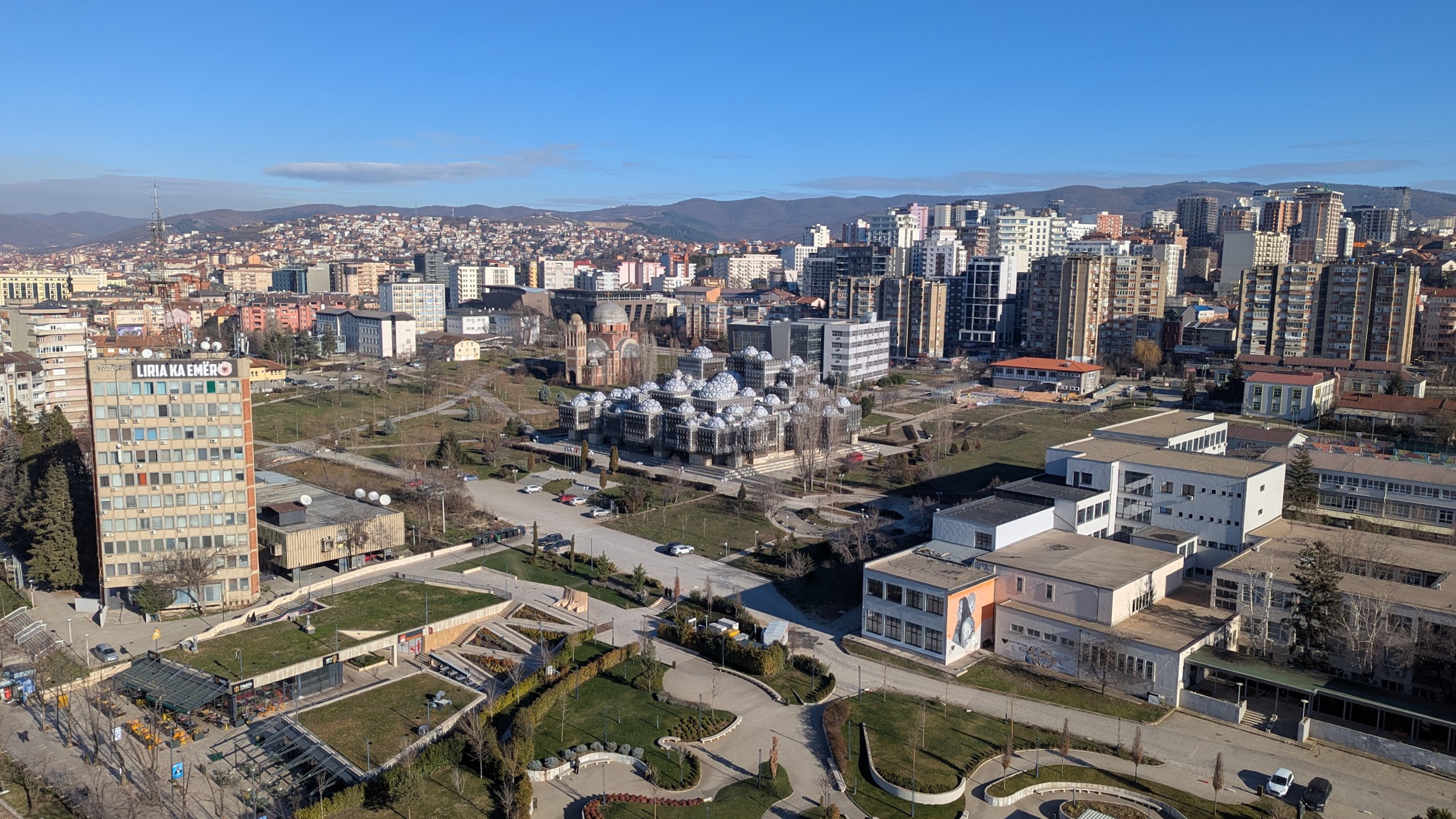 View from top of Mother Theresa Cathedral
A day is probably enough to see the main highlights of what Pristina has to offer. There is a bear sanctuary outside of the city that would have been interesting to visit but it was sadly closed the time we were there. The city is actually a bit more spread out than some of the previous ones so the walks to some of the places were a bit on the sportier side but if you plan out the places you want to see beforehand and create the shortest route it should take less than 5-6 hours to see most of it. As it was festive season most of the buildings were closed so we contended ourselves with seeing things from the outside.
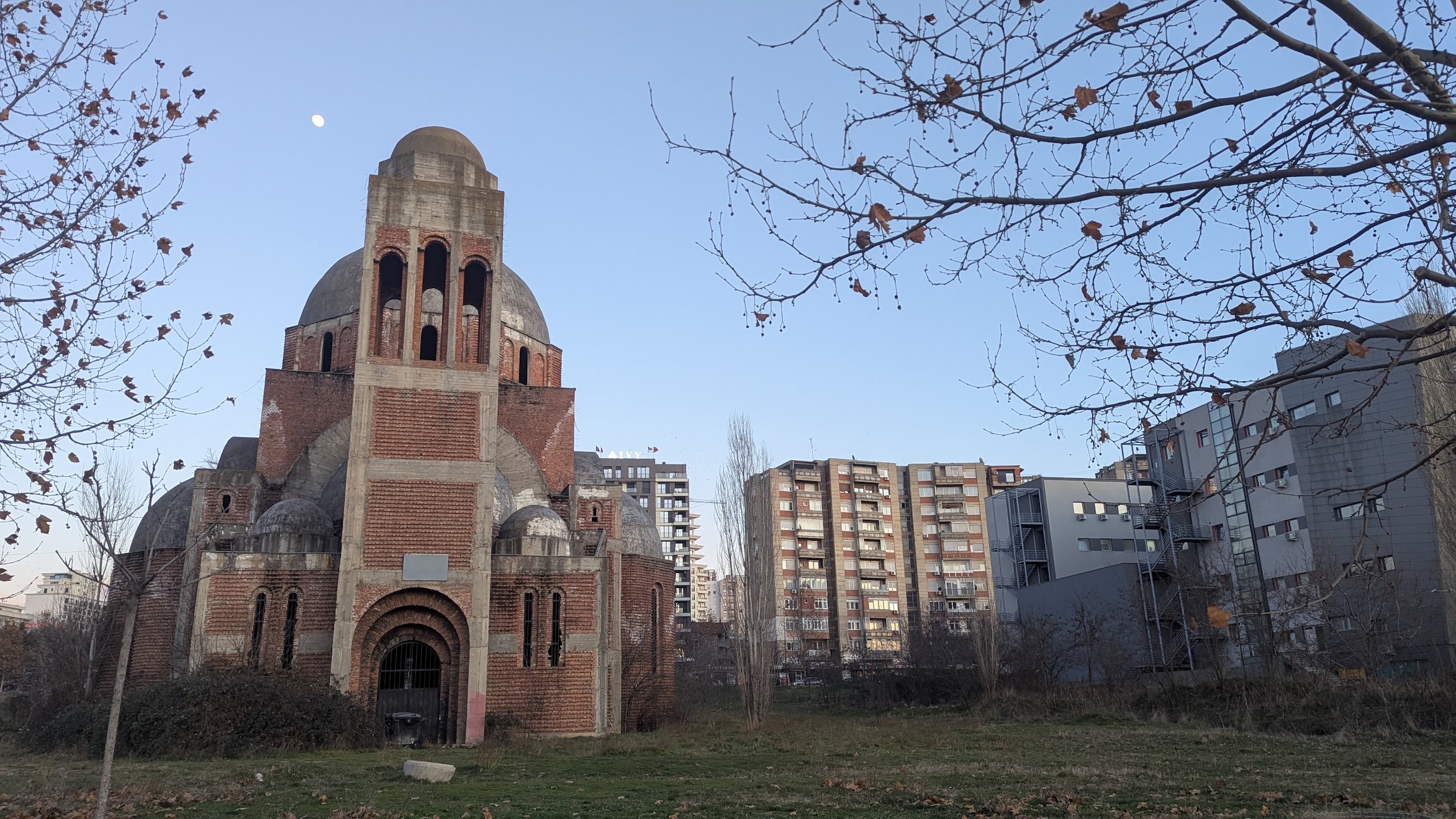 Abandonded Church of Christ the Savior
The service culture was also a little bit of a culture shock initially, at least compared to the slightly more touristy places we were in previously. The servers are direct and often not particularly helpful, with what felt like a “serve yourself” culture. It felt like they were used to local people who knew how things worked and didn’t have much patience to put extra effort or nicities for tourists. All the food was great though and once I shifted a bit more towards the local mindset everything went smoother. All part of the experience.
And yes the Bill Clinton statue and George bush streets are real and although not particularly majestic are well worth a visit for the photos as well as a nice stroll along the quieter residential backstreet area known as The Spine.
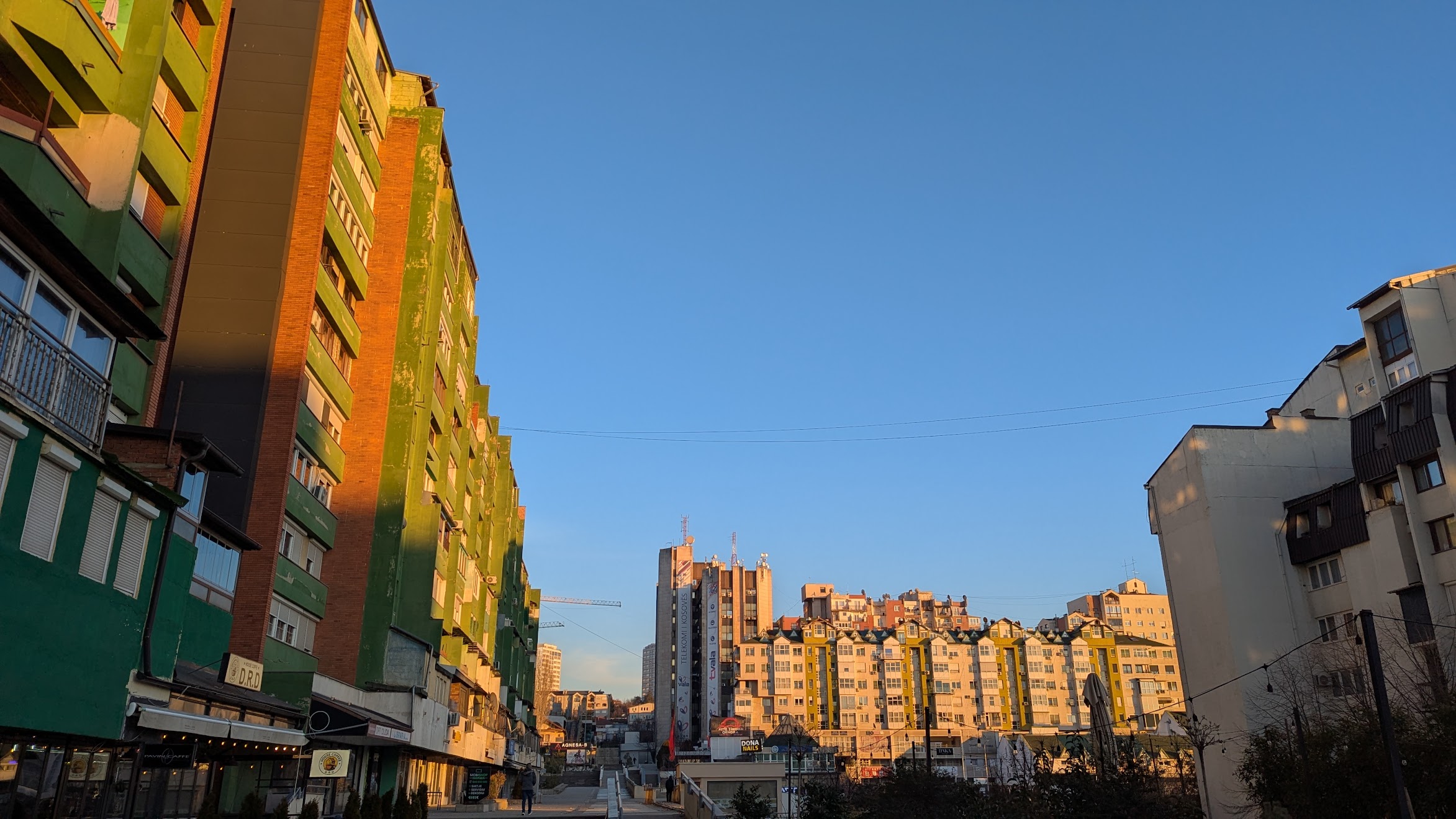 The Spine
Highlights
- National Library of Kosovo
- Mother Theresa Boulevard
- Varrezat e Dëshmorëve
- The Spine
- Buying cigars and shooting guns
Montenegro
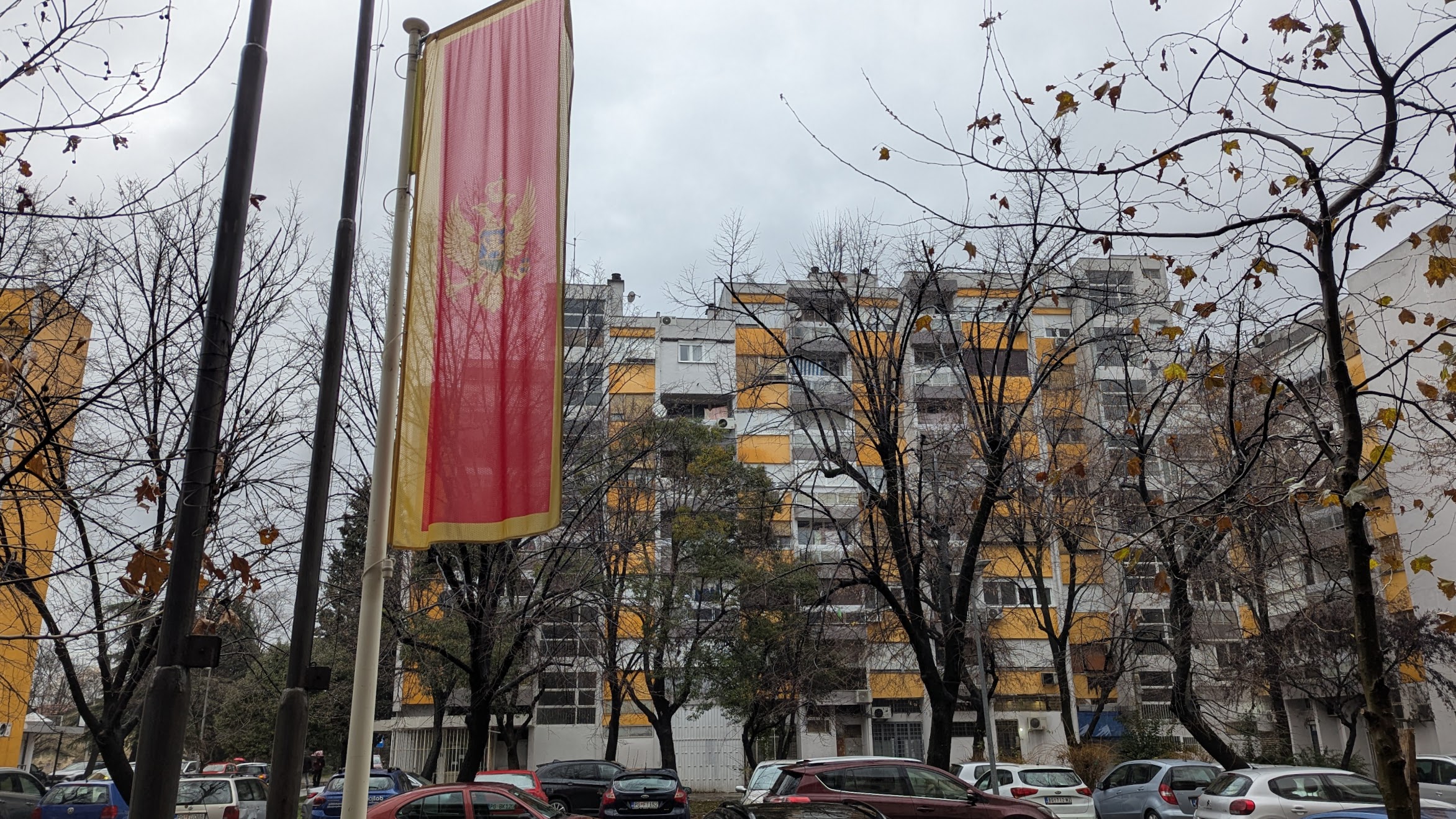 Coolest flag ever
Admittedly I won’t have as much to say here as I hoped as this part of the trip did not exactly go to plan. The weather turned for the worse during the days we were in Montenegro and it rained more or less non stop for 2-3 days. We were hoping to do a daytrip to Kotor but the sea was brought to us instead, forcing us to burn a day playing Catan in the hotel room and get some welcome rest. I would love to go back and visit Kotor (as well as other towns along the coast) in a more sunny setting.
The experience might have been slightly tarnished by the weather and definitely tarnished by the festive season as it felt like there was very little to do in the city. A lot of the restaurants were closed for the first half of January and a bunch of museums we were hoping to visit were also closed. Heavy off-season for a city that even in the best of times seems to have a reputation for having little to do.
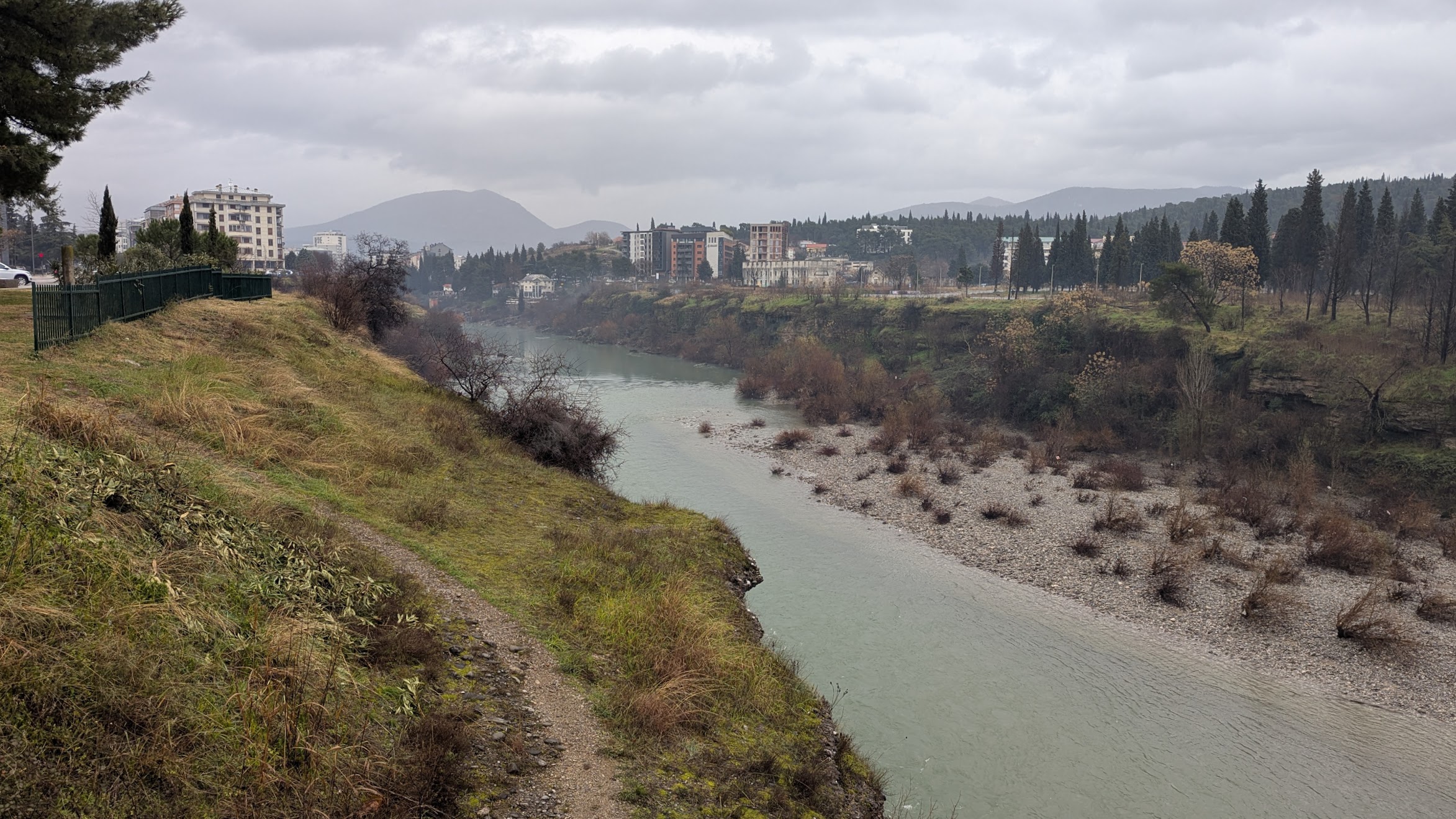 Podgorica River
We mostly enjoyed wandering around, seeing how many Montenegro flags and Soviet statues we could spot, trying to avoid spells of rain and homeless dogs. There were a few galleries that were open which were quite interesting, it seems like the city does have an artistic and intellectual collective even if it feels a little hidden. There was also an absurd amount of embassies in the city, more than any I’ve seen per square km anywhere else. I issue a challenge to anyone looking to fill some time to see how many they could go past in one day.
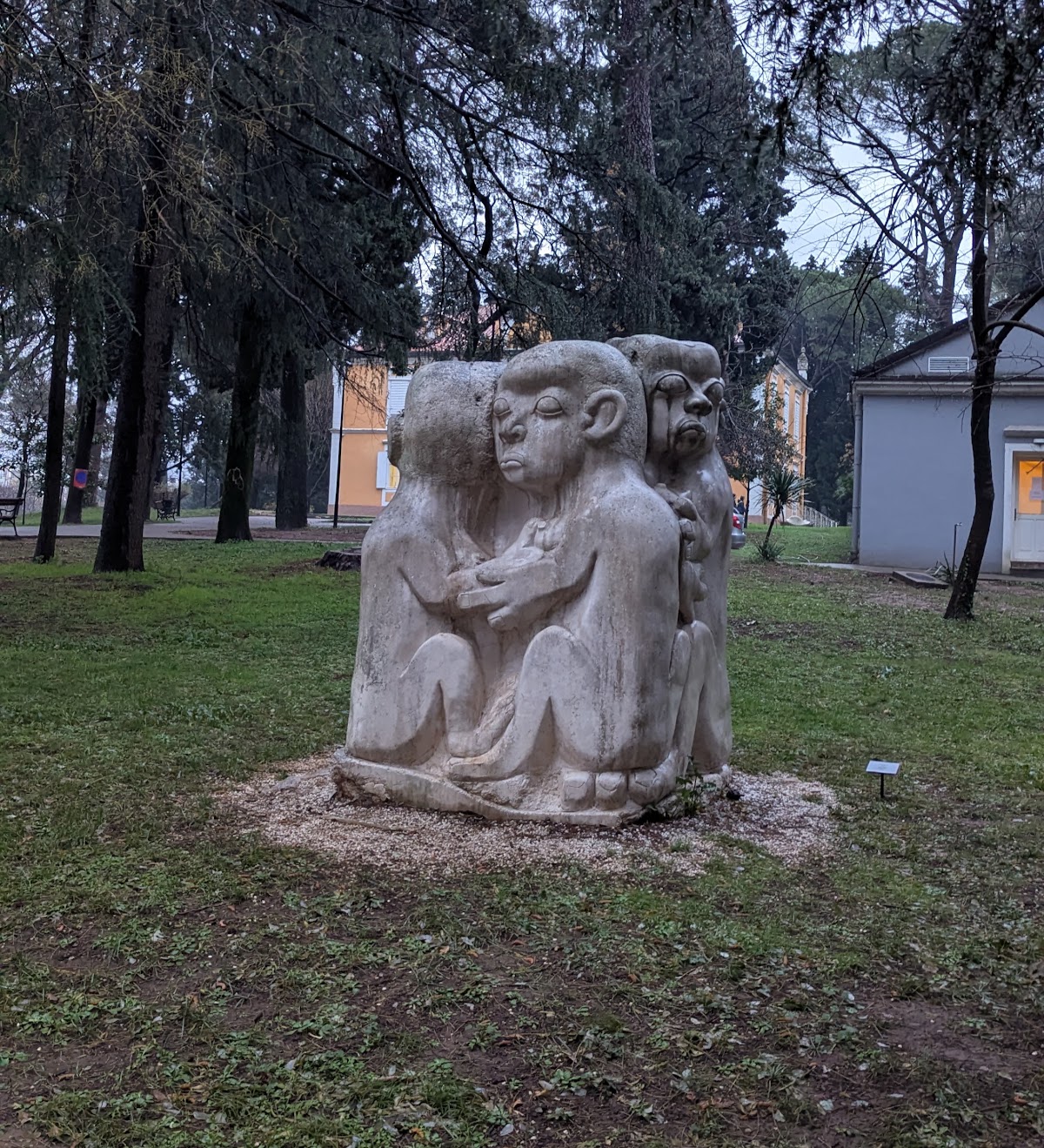 Petrovic Park
The road out of Podgorica was probably the highlight of the stay, being the most breathtaking part of the overall journey. Nothing quite like being 1000m up a mountain on a thin snowy road with a Balkan bus driver. The views were absolutely terrific, you understand how the country got its name. Would highly recommend this route if travelling to Bosnia.
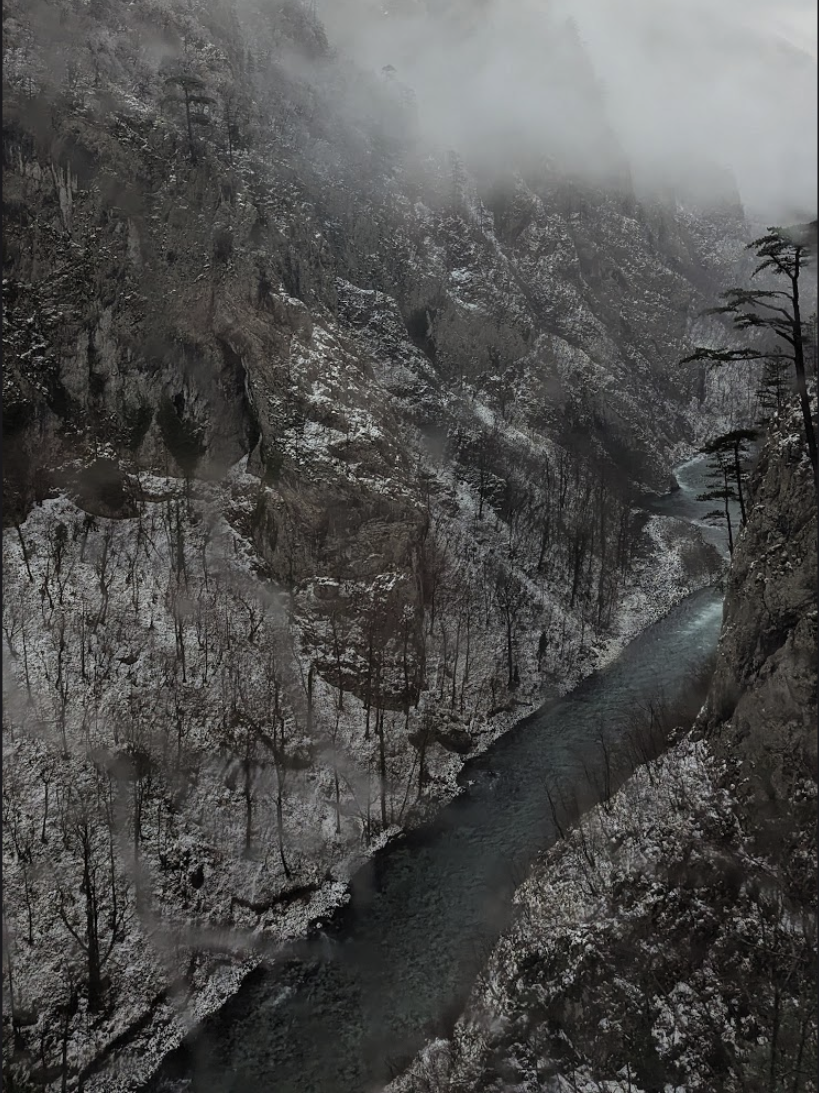 Montenegro Mountains
Highlights
- Petrovic Park/Museum
- Road to Bosnia through the mountains
- Daytrip (Kotor/Budva) if we went
Bosnia
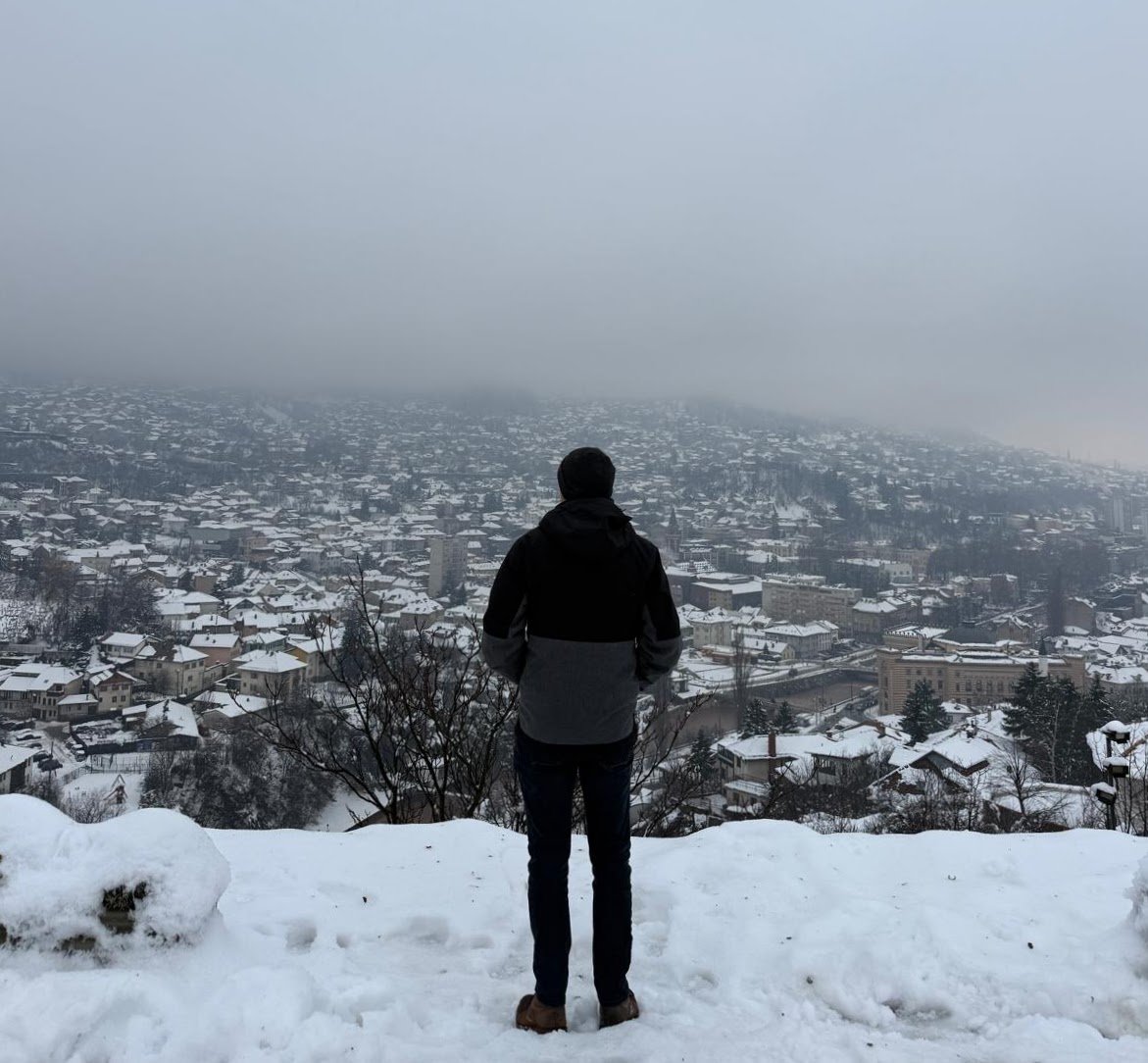 Yellow Fortress Views
And somehow it was already the final stop of the trip. It snowed pretty heavily in this region over Christmas so we were greeted with a very white Sarajevo. Unfortunately due to the snow we also had to cancel our planned daytrip to Mostar but as with Kotor it’s on my list of places to come back to in warmer weather.
Bosnia has a sad history most people have heard at least a little bit about and there is plenty of memory that perseveres throughout the city, from multiple war crime museums to “Sarajevo Roses” group prints where shells fell and killed citizens during the siege.
But there is also a lot more history and culture to see in Bosnia. It is perhaps the most poignant example of the Balkans being a crossroads of cultures, with it historically being influenced by different cultures, ethnicities and religions, all of which have found a part in the makeup of today’s Bosnia. There is an Orthodox and Catholic church, a Mosque and Synagogue all within 5 minutes of each other from the city center of Sarajevo. The town architecture is a mixture of 20th century soviet, Austrian, Ottoman styles and more. The old and new town also blend together seamlessly, yet the mixture feels beautiful and refreshing rather than confusing. It all somehow feels like Bosnia despite having many different faces.
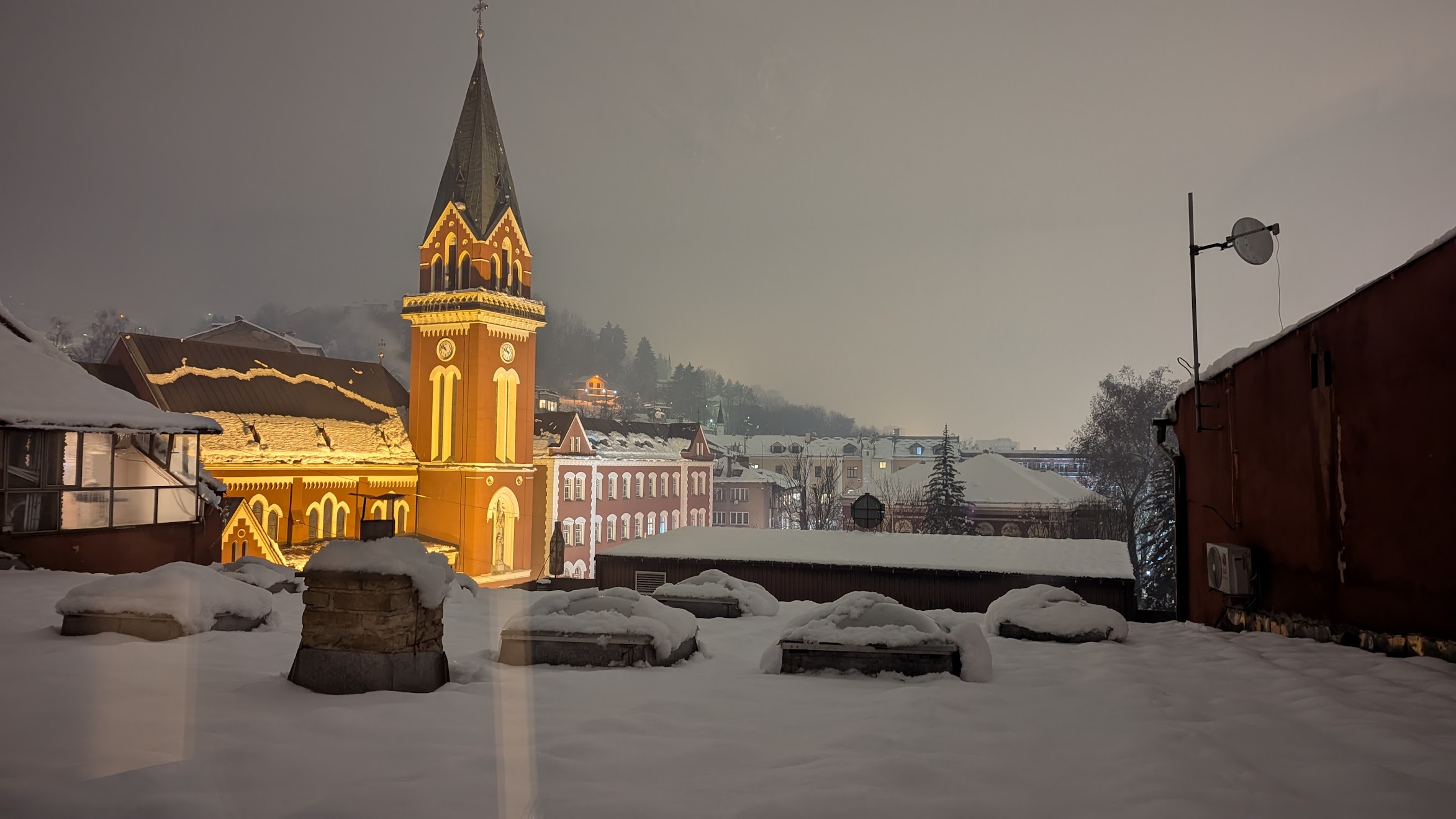 Beer Factory Hotel
We stayed in a room in the Sarajevo brewery which was a very authentic 70s styled flat next to the city center which was wonderfully cosy amidst the snow. The owner was extremely nice and talked lots about the city and even invited us out for lunch.
The city is very large (or rather, long) because of its unique location so getting to the newer part of the city nearer the airport takes a bit of time. I would recommend at least 2 or to be comfortable 3 days in Sarajevo if you want enough time to see the highlights and also soak in the atmosphere.
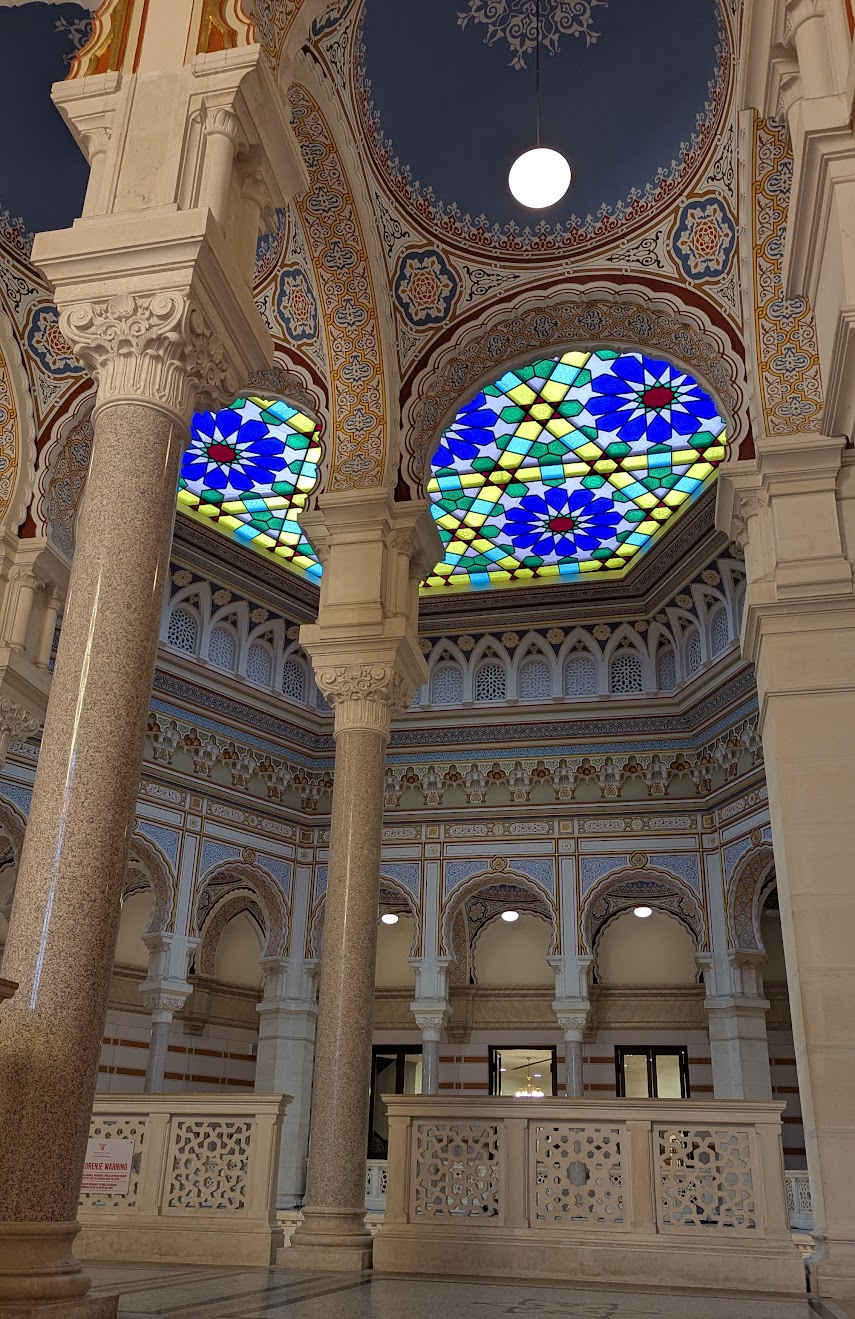 City Hall
The old town is a good starting place, from where you can go West towards the newer part of the town with museums, shops and bars, or North and South to explore the smaller niche areas and get some nice views from high up. There are sadly quite a few cemeteries and memorials, keeping the past ever present in the memory of the city. A particularly beautiful moment caught us as we were talking through the Martyrs Cemetary and heard a call to prayer echoing out across the city, life persisting and ongoing.
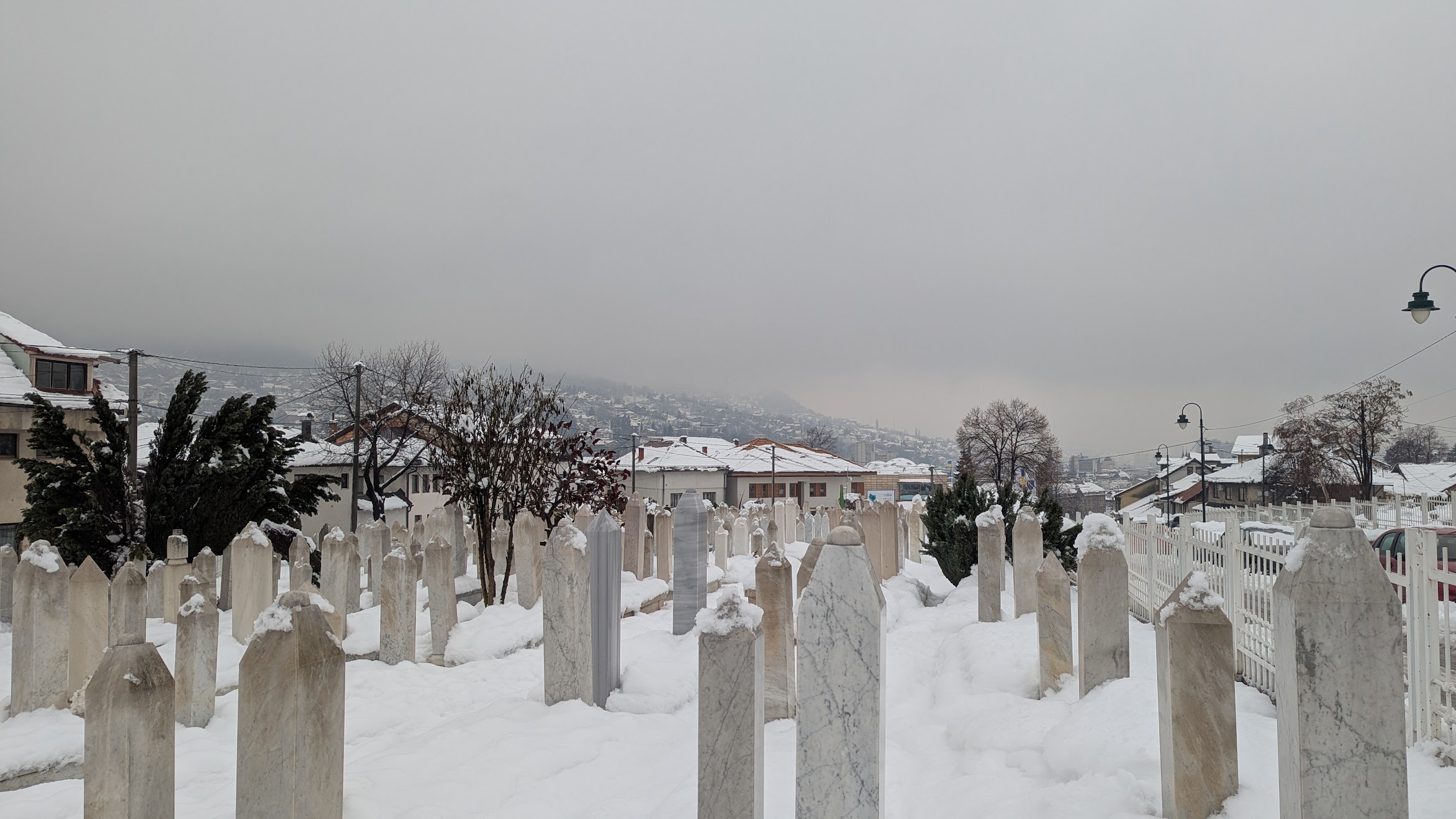 Kovači Cemetery
As this was the last stop of the trip and we couldn’t go on another daytrip it was a good opportunity to slow down and soak in the city as well as the whole trip. Sarajevo was a great place to sit down in a cafe or a bar, have a conversation but also just people watch and merge with the surroundings around you. Despite the troubled past there is so much vibrant and diverse life here that can be felt in a unique way here.
Go and experience these places now while you can still feel like a local in them. With more of the world becoming dominated by the tourist industry, Western chains, monoculture or government funding rebranding projects these places still provide an authentic beauty that might not be there for long.
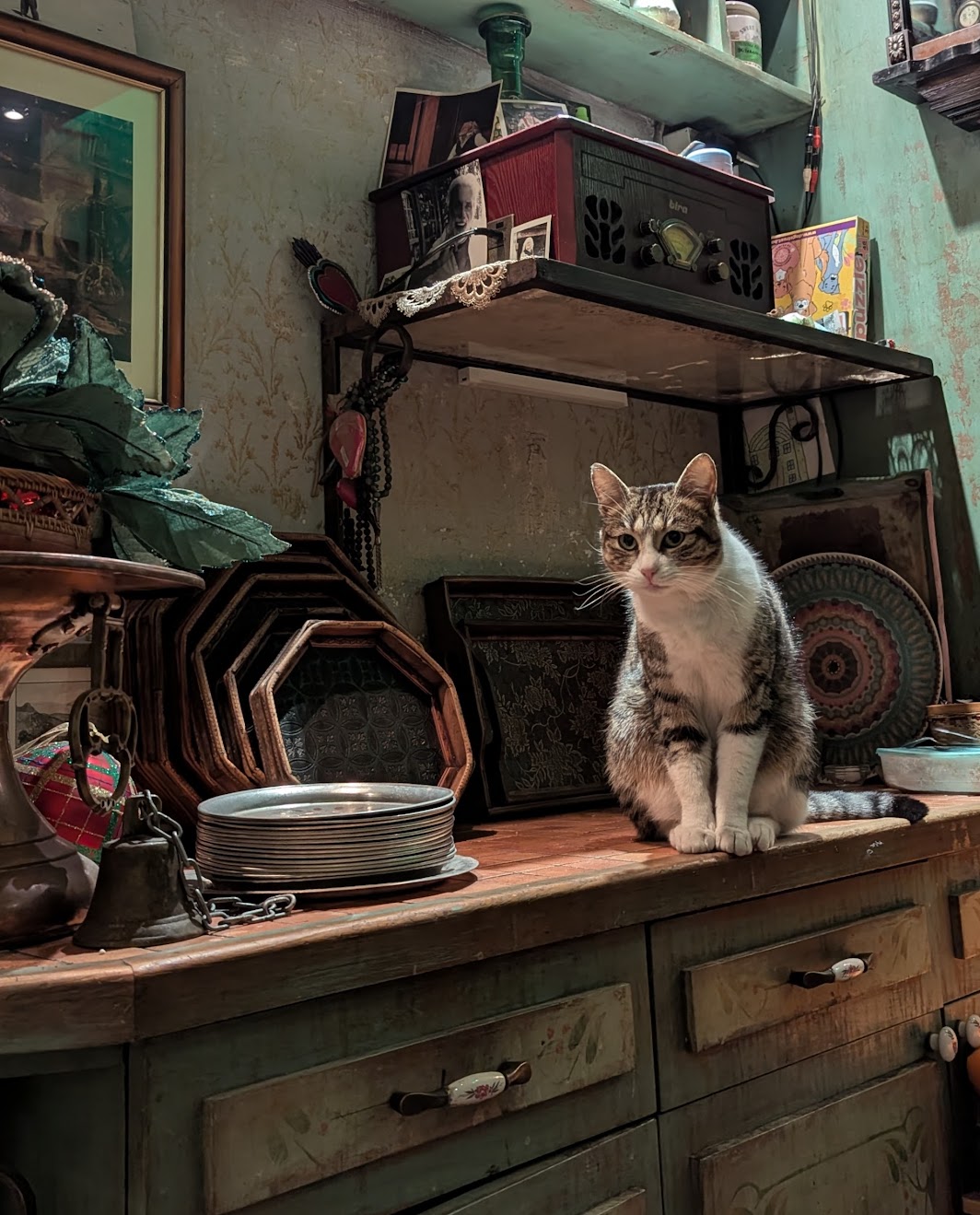
Highlights
- Yellow Fortress Views
- Gazi Husrev-beg Mosque/Museum
- City Hall
- Sitting and drinking tea/coffee in the old town
Getting to the Airport
The airport is quite far from the city center. Getting a taxi is probably the easier option but if like us you’re looking to save a bit of money and get the bus beware of google maps telling you to use the bus stop on the side of the street - we waited there and no buses came. We were able to catch a 106 or 107 bus to near the airport from the bus station here. After that it’s a ~10 min walk through some backstreets and parks to go directly to the terminal.
Notes
Language
Bosnia uses Bosnian which is in the same family of languages as Slovenian/Croatian/ Serbian so picking up a few phrases from any of these will have the largest mileage (at least knowing enough to say Zdravo and Hvala).
Montenegrin has been influenced by Venecian interestingly enough but is still closely enough related to the slav languages above to use some of the basic phrases.
Macedonian is again somewhat close to the slavic languages above although written in cyrillic (as introduced by our guys St Clement and Cyril in Ohrid).
Albanian is the native language in Albania and Kosovo and quite distinct from the other languages.
Most younger people speak at least some English and the older generation are happy to gesture for you to get your phone out to be able to use google translate. Some areas will have history of learning German or other languages due to historic ties. Everyone we met was happy to partake in conversation despite any language barriers.
Currency
Kosovo is the only country to officially use the Euro with the rest of the countries having their own currency. Quite a lot of the places we went to only accepted cash (as well as a lot of the hotels if you pay at the property) so it’s a good idea to have plenty of spare in person, at the very least Euros you can exchange. ATMs in a lot of places will either charge you a decent sum for using them or be sporadically available. A lot of places will also not exchange Scottish banknotes (angry bagpipes in the background) so taking enough Euros is not a bad idea.
Food
The Balkans are a meat heavy countries. As a vegetarian I was able to scrape by feeding myself, admittedly quite often from chain restaurants or shop halls of porridge and noodles. When wanting to dive a bit more into some authentic restaurants upon one instance I was told the vegetarian options consisted of the “chicken salad without the chicken” which sums up the options. But there are definitely plenty of options to get by if you sacrifice some of the authenticity. A cheese burek is about as close as you can get from takeaway places which is still very nice.
If you eat meat you’re in for a good time. Kebabs, Ćevapi and whole fresh rotisserie chickens for pocket change await. Coffee is also excellent with it being a heavy part of the culture and Turkish style coffee is a must try here. Plenty of delicious snacks and cakes and all fairly cheap if you avoid the super touristy places.